Connecting Audit Records to Progressive Jackpot Mechanics in Mobile Casino Environments
Freya Carter · Oct 11, 2026

Connecting Audit Records to Progressive Jackpot Mechanics in Mobile Casino Environments
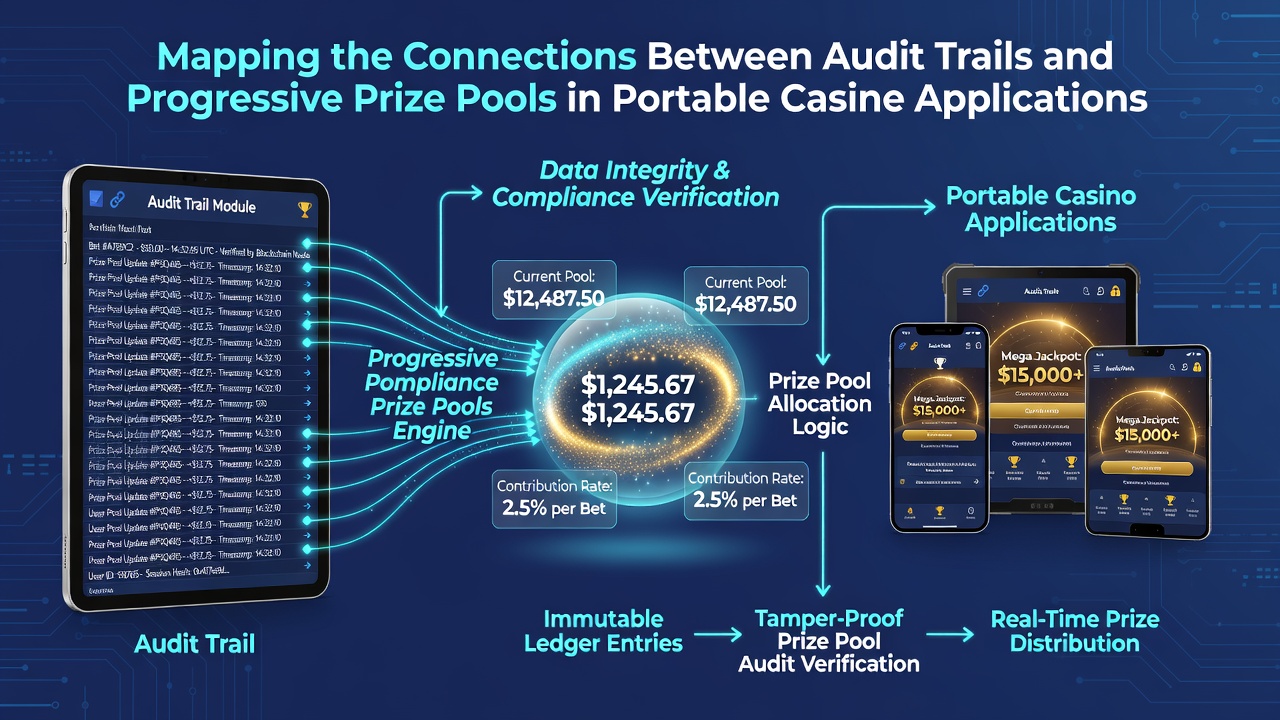
Portable casino applications track every wager, contribution, and payout through structured audit trails that feed directly into progressive prize pool calculations. These systems log player activity in real time so operators can verify that each bet adds the correct percentage to growing jackpots across multiple games and jurisdictions. Regulatory frameworks in several regions require operators to maintain immutable records that link individual transactions to pool totals, creating a verifiable chain from the moment a player places a bet until the pool reaches a payout threshold.
Data from the Nevada Gaming Control Board shows that mobile platforms generated over 40 percent of total gaming revenue in the first half of 2026, with progressive titles contributing a growing share of that figure. Audit systems capture the exact moment each contribution occurs, timestamped to the millisecond, and store it alongside device identifiers and session details. This level of granularity allows investigators to reconstruct pool growth even when players switch between games or networks during a single session.
Technical Pathways from Bet to Pool
Each progressive jackpot in mobile applications draws contributions through a centralized metering system that receives encrypted data packets from player devices. Audit trails record the bet amount, the game identifier, the contribution rate agreed upon in the game rules, and the resulting increment to the pool balance. Independent testing laboratories certify that these calculations match certified random number generator outputs before any title receives approval for distribution across state lines.
Operators integrate these logs with backend databases that update pool displays on user screens within seconds. When a player triggers a bonus round or enters a qualifying bet, the audit record flags the event so that the progressive meter can be checked against the stored history. This process prevents discrepancies that might arise from network latency or device caching issues common in portable environments.
What's notable is how these same records support multi-state operations where different tax rates and contribution percentages apply depending on player location. The system tags each transaction with geolocation data and regulatory jurisdiction codes, allowing the audit trail to split contributions accurately across separate prize pools when required by law.
Regulatory Oversight and Verification Practices
State regulators review audit samples during routine compliance checks to confirm that progressive pools reflect actual player activity. In October 2026, several gaming commissions expanded their remote monitoring capabilities, requiring operators to provide API access to live audit streams rather than monthly summary reports. This shift gives oversight bodies the ability to flag unusual pool growth patterns in near real time.
Research published by the University of Nevada, Reno gaming laboratory examined over 12 million mobile progressive transactions from 2025 and found that audit trails identified 0.3 percent of contributions that required manual review due to timing anomalies or device fingerprint mismatches. Those flagged records led to adjustments in pool balances before any jackpot reached payout status.
Industry associations such as the European Gaming and Betting Association have published technical guidelines that recommend storing audit data for a minimum of five years, with cryptographic hashing applied to each log entry. These standards help ensure that historical pool calculations remain defensible during license renewal proceedings or dispute resolutions.
Security Measures and Anomaly Detection
Mobile platforms employ layered security that cross-references audit trails against known fraud signatures. When a cluster of bets from the same device or IP range appears to accelerate pool growth disproportionately, automated systems isolate those transactions for further review. Progressive prize pools remain protected because the audit layer can reverse unauthorized contributions without affecting the underlying game logic.
Operators also maintain separate audit channels for jackpot triggers themselves. When a player wins a progressive prize, the system generates a final confirmation record that includes the winning bet details, the exact pool balance at the moment of the win, and the subsequent reset value. Regulators in multiple jurisdictions require this record to be submitted within 24 hours of the event.
Future Developments in Audit Integration
Developers continue to refine how portable applications transmit audit data while preserving battery life and minimizing latency. Emerging protocols compress log entries on the device before sending them to central servers, yet retain enough metadata for full reconstruction during audits. Several suppliers have begun testing blockchain-based verification layers that create additional immutable copies of progressive pool updates, though adoption remains limited to pilot programs in two North American markets as of late 2026.
These advancements build on existing frameworks that already tie audit trails to prize pool integrity. The connections between logged activity and jackpot mechanics continue to strengthen as regulatory expectations and technical capabilities evolve in parallel.
Conclusion
Audit trails serve as the foundational record that validates every contribution to progressive prize pools in mobile casino applications. Through detailed logging, regulatory access, and anomaly detection, operators maintain verifiable links between individual player actions and overall pool balances. As mobile gaming expands and oversight requirements tighten, these connections remain central to ensuring accurate and transparent jackpot operations across portable platforms.